


 People
All SBA people have worked together for many years and provide experience in senior management roles and relationships, employee research, workshop facilitation, coaching, communications and analysis — the key elements of developing a great employer brand. Plus Mergers and Acquisitions where every element of that is needed (ideally before completion).
 Clients
I have worked for many great employers in my time among them Chanel, Mercedes-Benz, Hiscox, Invesco Perpetual, Vestey Group, Freshfields and the Israeli Pharmaceutical leader Teva. These in particular demonstrated the hallmarks of determined and visible leadership, clarity of purpose and the ability to inspire loyalty and engagement (including that from their suppliers).
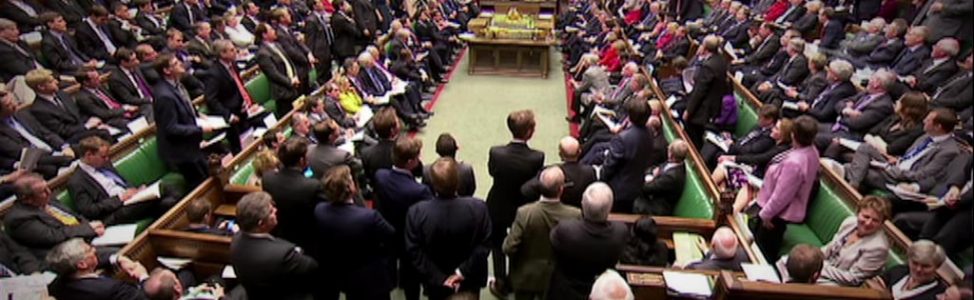 UK Politicians – an abject failure in Employer Brand Management. Has anyone ever even tried?





The high level of Football Fan engagement and passion
Would you like your audiences to feel that way about your industry?

Judging by concerns on the low engagement of customers and employees. Would not many leaders love to have the level support for their industry that football fans demonstrate?
The problem is that the way fans think is likely to be different to the way business leaders think. While both will welcome operational success and recognition for their brand and industry, fans commitment will involve their group loyalty to the game and their club’s representation of their community, city or area. While poor performance and poor prospects will cause a shareholder to sell, failure of a football club prompts the anger of fans not their exit. They feel the club is part of them and they want to see action to change its fortunes but without threatening its connection with their community and way of life.
Football clubs has long been owned and influenced by successful local entrepreneurs but given the success of the game it has attracted global owners. You will remember back in April the ferocious fan driven attack on wealthy football club owners who, after just three days had to scrap a business plan to establish a new European league. That group would have freed its members from the threat of relegation and financial penalty. Fans have great power based on their emotional unity so a club’s business plans must be alert to commercial thinking which might be seen to be at odds with the basic values and behaviours of the fans. That emotional unity is what makes fans so powerful, they don’t work for you, they don’t depend on you for all the tangible aspects of a relationship – earnings, advancement etc. They can afford to throw the book at you. In practical terms you cannot push back. You have no hold on them.
That’s true for all of us when it comes to emotional relationships with a business. How many of us would act like fans if we thought something precious and close to us at work was under threat? And try to change it rather than just leave? What would send us to the barricades, a demonstration or becoming a passionate activist? What threats would stir us? The future of a political party? the BBC? The NHS? Education? Climate change? The Monarchy? The Rule of Law? All of these could generate action but how united would it be compared to football fans who appear to have unquestioning unity? Interesting to see what impact the racial abuse on social media post the England/Italy final may have on fans. What % of fans did the abusers truly reflect ditto the Bend the Knee booers? I do not believe fans attitudes and behaviour match those of extreme political groups or religious sects. How well do Clubs and the FA understand their fans?
What points does this hammer home for me?
- All of us deep down have the capacity to feel as strongly as fans do. It’s within us all
- Family, friends, where we live, and our liberty will be the basis for most peoples’ potential passion when threatened ditto a personal interest, our work, or a great cause
- We want others to feel strongly about what we do and for whom
- Business leaders want all involved to have cause to trust, respect the organisations they lead
I can see a potential new battle ground as some fans boo the players themselves and their own ‘Bend the knee’ demonstration against racial injustice publicly supported by England manager Gareth Southgate.
The problem is that it is emotional rather than commercial. The new League idea would have increased financial security, but that was no match for the passion, power and unity of the fans welded together by a sense of pride and belonging representing their community and way of life.
We are all Fans at heart.
Simon Barrow
February 10, 2021 | natasha
Regaining the trust of 70m US voters, how can they be all that they can be?
The need for a New Deal and new thinking to unify a great country.
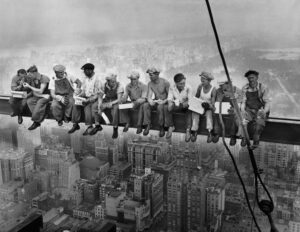
‘Men on Girder’ Rockefeller Centre NYC 1932 Classic picture of American workers. How did their descendants vote?
Joe Biden’s inauguration 20th January showed us the decency of a country we love and trust and so moving to see this celebration of its democracy. America inspired me as a 17 year old exchange student and I owe it much. But that day I felt a pang of regret as well as relief.
That’s because there was a missing group who felt they did not matter and that their views and lifestyles were out of line with today’s America. Yet within my lifetime this was a group that showed America at its best – robust, hardworking, forthright, confident, proud to be American and no longer teaming masses yearning to be free. Communism never had a chance with them. 70 million obviously covers a wide range and of course they are not all fascists and racists, but it will include many whose anger has lowered respect for democracy. Violent extremists will be a minority, but it is their behaviour which has created the reputation of this vast protest group. However, thinking you can ignore these millions is no way to bring them back into a truly united country which is where they were.
Their ancestors
The picture above – ‘Men on Girder’- makes me wonder what the descendants of that and earlier generations are thinking today? Their ancestors built America, worked the land, drove the trucks, manned the assembly lines and were parents of great people like President Harry Truman and Sidney Weinberg of Goldman Sachs. Writers like John Steinbeck, Woody Guthrie, Sinclair Lewis, Joseph Heller and Clifford Odets described them. Some of them, in WW2, died on the Normandy beaches of Utah and Omaha. Thousands more in the Pacific, later in Korea and a high % of the 57,000 American war dead in Vietnam.
Do you agree with the line ‘There are no bad men only bad officers’? If you do then ask yourself why have recent leaders, not only in the USA, been so blind to the emergence of discontent and disengagement among millions isolated due to technological change, poor training, lack of opportunity and an increasingly wide gap, both economically and culturally, between them and the rest of America? Small wonder then that this group were so easily lit up in anger by a President who failed to be a President for all Americans. This was once again confirmation of the old line ‘A riot is the sound of people who have not been listened to’ and is so often music to the ears of would-be dictators, tyrants and cyber war mongers as well as, in time, their death knell.
What to do now?
Understand them, respect them and inspire them. Include them in a new deal greater and deeper psychologically than FDR’s. Lectures and arrogance will only harden their hatred of an elite they feel so distanced from. One personal memory maybe relevant. In the 1980s I ran an advertising agency in London and our partners in NY, NW Ayer, worked on US Army recruitment. That demonstrated an understanding of what potential enlisted men in America were looking for – recognition, experience and development. It led with the line ‘Be all that you can be’ -a message which dug deep into the realities of what American youth most sought – self-improvement and inclusivity, truly a part of the American Dream. It reflected changes in the military experience. No message can bring change unless it is alongside tangible action and new behaviours.
There’s a lesson here for so many employers. I have just read the depressing 2021 annual Edelman Trust barometer report highlighting massive declines in trust across Governments, NGOs and the Media. Business fares better and CEOs are now expected to be agents for change in society at large – on inequalities, education and the environment. Business leaders cannot ignore signs of distrust and disengagement in any audience. Neither today, in time, can any Government.
Simon Barrow
October 5, 2020 | natasha
Recognition – always a key EB component, and more so than ever in times like this

Recognition of Teachers at the Annual Awards Event, with thanks to the Pearson Teaching Awards Trust for providing this picture.
Can you remember when you were first recognised for something at work?
Aged 21, I was doing a long vacation job for the F&M Schaefer Brewing Co in Brooklyn NY as an assistant on a packaging plant cost control project and paid $2 per hour. The aim was to establish what was causing the line to go down e.g. breakages, supply of closures, supply of bottles, supply of beer, maintenance, operator attention and delay in moving finished product.
After three weeks, out of the blue, they gave me some positive feedback and a rise to $2.75 per hour. Have never forgotten that.
Recognition comes in so many ways
As part of a team, you as an individual, in private or as a group and demonstrated in so many ways – being listened to, taking action as a result, getting a comment verbal or in writing (and it does not have to be positive, recognition of an error and what to learn from it may be life changing). Could be being asked to help, being chosen to join a team (google Janice Ian’s song ‘at 17’ – ‘whose names were never called when choosing sides at basketball’. Winning an award, getting feedback from something you have said, written or done. Of course, tangible changes like money and promotion are often what many think recognition is all about. The UK’s problems with recruitment and retention of GPs are about listening and recognition not money.
The Pearson Teaching Awards is a wonderful example
It has been a privilege to be one of their trustees (though my statutory time is up). Their aim is ‘’Celebrating Transformational Teaching across the UK’’. It was started by the film director David , now Lord, Putnam in 1998 when, at a gathering of teachers, he thought how good it would be if there was the equivalent of Oscars for them. There are now awards for every category – Outstanding New Teacher of the Year, Digital Innovator, Head Teacher in a Secondary School, Teaching Assistant, Excellence in Special Needs, Teacher of the Year in a Primary School, Head Teacher of the Year in a Secondary School and many more. The long list is created through colleagues, parents and children and also via the ‘’Thank a Teacher’’ scheme which is one form of recognition on its own. The Head Teacher completes the entry which is assessed by judges in areas across the UK.
The highlight of the year is the National award ceremony each October (but sadly not this year) with an audience of around 600 present. It’s an emotional evening seeing these teachers being announced in true Oscar style by a volunteer VIP/Celebrity, opening the envelope, announcing the winner and the school. Then going up to receive their award and to see a BBC video made about what they have done and how. Around 800,000 watch the subsequent ‘Classroom Heroes’ programme on BBC2.
It is a form of recognition which enhances corporate recognition as well.
I feel describing these events in corporate PR language somehow demeans their real value. Teaching is not a world of spin, here are teachers at all levels who care for what they do and demonstrate great ability to change the lives of the children they teach.
Why do such ceremonies always move me?
It’s because they make me think of the millions of workers who are NEVER recognised for anything and this winter there will be many more. Companies recognise their alumni whose later success indicate that the firm is a springboard or an ‘Academy Company’. But how about recognition of those made redundant? Who tracks them? How do they feel about you? How might you help them retrain, network with others? Do they feel that they too are recognised as alumni? You must have thought they were good enough to hire.
Is not the ability and the preparedness to recognise people an essential ingredient of an employer brand you can be proud of? even more important in bad times like this.
Recognise AVON for how they recognise their representatives
Recognition is a vital part of the experience they offer those who work as independent representatives selling Avon’s products to their neighbours. I have worked for them as a supplier and been a guest at local awards ceremonies
That is where I have seen how genuine, heartfelt, engaged and people focussed the senior management are. They could not fake how they behave and they would not be employed if they could.
Investors should probe a company’s ability to recognise their people
On 29th Sept, at a virtual CIPD London conference, I heard Leena Nair CHRO of Unilever brilliantly describe her approach to enhancing the potential of all human beings at work (Unilever employs 160,000).I’d recommend every fund manager and investment analyst, when meeting Corporate leaders, to meet people like her. The financial numbers are only part of the picture, investment professionals should explore management of the soft issues and recognition is one of them.
Simon Barrow
January 24, 2020 | natasha
‘Weirdos and Misfits’
The crucial missing ingredient in Dominic Cummings’ recruitment thinking
Simon’s blog, January 2020

Dominic Cummings’ blog (2nd January) clearly describes the desired skills, qualities, education and experience of the new people he believes are necessary to create the innovation and change sought by this administration. He thinks that a bolder and more challenging set of people are needed: they will be clever and technologically diverse. They will break the established mode.
He is not the first to think this way. Others have wanted radical change agents to achieve new goals and standards. A new team with people like that may be scary for the old guard but that is what cultural change is all about.
Think about Bletchley Park, the WW2 organisation charged with breaking the Enigma code and for whom the brilliant Alan Turin worked (later tragically misunderstood and mistreated). They started recruiting unusual and talented people: university mathematicians with exceptional language skills who could solve difficult puzzles – poets who had an affinity and ear for the infinite possibilities of language – people who could reconstruct dead languages by breaking codes such as hieroglyphics used by pharaohs – Chess champions, given that to excel at chess is to hold 100 abstract possibilities in one’s head which is why chess players made formidable code breakers.
Bletchley Park is an inspiring example of breaking the mould, so what is the missing ingredient in Cummings’ initiative?
It lacks the power of Bletchley’s unifying sense of purpose: the need to defend us from Germany’s Third Reich against whom this country stood alone until Pearl Harbour, 7th December 1941.
An Employer Brand must reflect an urgent and overarching purpose which will attract outstanding and uniquely qualified talent. If that is missing it’s just another job.
It is the lack of that emotional power which makes this Government initiative so challenging. It is entwined with politics and divisions and it fails to state the vision and aim which will inspire the target audience.
The handicap is that HMG have not stated the vision in terms which will stir the heart beyond ‘Take Back Control’ and ‘Get Brexit done’. Those are clear goals but the realities in planning our future actual relationships which will be a complex balance eg with the rest of Europe, with America and indeed within the UK eg Scotland and Northern Ireland. How does it apply to supply chains of companies investing here and our services, in particular London’s financial services? What will our future ability be to hire people from Europe and elsewhere? How are we going to work together on matters which affect us all – defence, crime prevention, climate change, R&D? Success in all that will need trust, respect and partnership and that must be evident from the start.
Running through Cummings’ blog is the theme of superior intelligence. Such people can be difficult to pigeonhole. That was fine at Bletchley since the overall aim was clear and urgent. He has high standards but many of those who qualify intellectually may have personal beliefs which rule them out. What kind of people are not welcome and will be shown the door as he threatens? He needs to be clearer up front on this.
There are some warning signals for the rest of the Civil Service and its culture e.g. “changing policy and the structure of decision making, being prepared to take risks to change things a lot and ‘not being worried about short term unpopularity”. Does he mean to scare them? There are more effective ways of changing culture.
Brilliant ‘Weirdos and Misfits’ are hard to marshal and discipline. They can make trouble if they see an end game which you cannot live with. That is why they are often not regarded as ‘sound’ but that is what makes them so special.
Only a great shared and specific vision can hope to unify the UK and harness everyone whatever their past and present beliefs.
Simon Barrow
March 20, 2019 | natasha
UK Politicians – an abject failure in Employer Brand Management. Has anyone ever even tried?

The role of ‘UK Politicians’ fails on every level of Employer Brand best practice. It looks like nobody has ever tried to do what modern employers do while realising that being an MP is very different. It’s a free country just let it happen people may say. Yet this job matters for all of us and we want to see outstanding candidates coming forward.
Of course, being an MP is a unique job unlike any other. It’s fine that anybody can have a go but nobody is leading action to encourage and engage those with the most to give. Which party is not the point, it’s the job itself.
Politicians should be diverse on every dimension but they should also be people we are proud of and whom we trust and respect whatever their views. That is critical for our 650 constituencies who need their analysis, independence, courage and commitment to parliamentary democracy. And there is an even more critical requirement. It is only from these people, our elected MPs, that future Prime Ministers, Leaders of the Opposition, their cabinets and shadow cabinets will emerge. Why is the choice of them so limited?
People have complained about politicians for years but now, in this crisis of leadership and confidence’ enough is enough. We need to improve the reputation of the job.
Imagine there was a senior Government role above the parties like the Speaker, someone responsible for:
- ensuring that the role of MP, in any party, is seen by those best qualified for it, as something they would love to do and,
- ensuring that the realities of the role did not unduly deter such people from coming forward and remaining engaged.
That in essence is what any strong Employer Brand Manager does. What would such a person start doing to address what is wrong and upgrade the job? Here goes:
- Answer the question: what makes a great MP whatever the party? Consider for example character, intelligence, integrity, diligence, motivation (ie for mankind, country, party and themselves).
- What do we know about recent and current MPs? We know something of what they studied from a Wikipedia review of 374 MPs out of 650:
• The top four subjects were Social Studies of some sort, Law, History/Philosophy and languages.
• They are short on STEM subjects – only 11.3% of Conservatives and 11.9% of Labour, prompting the Institute for Government to report Ministers frequently do not pay sufficient attention to the IT dimensions of policy announcements.
• From a House of Commons Library briefing paper Nov 2018 some figures: female 32%, LGBTQ 7%, over 50s 52%, non white 8% (versus 14% population), graduates 82%, fee paid education 29% (Cons 44% vs 72% in 1979, Labour 13%).
• What occupational background do they have and how have they changed over the years? Several messages here:1979 2015 Professions 45% 31% Business 22% 31% Miscellaneous:
White collar, political studiesPublishing, media 17% 35% Manual workers 16% 3% - The above only takes us so far, it does not tell us about the personality and relationships with others. Information from assessments like Myers Briggs, The Kirton test for Innovation, team players versus individuals, numerical and verbal reasoning, the awareness of danger and risk. Of course, MPs cannot be instructed to take any of these but knowing what the most effective politicians tend to have in terms of personality would be a useful guide for those considering joining them. I recall, aged 17, when at an American school, taking the Edward Strong personality test (created at Stanford) and, looking back at the scores. how incredibly accurate they were on what I should do and who I would be happiest working with.
- What about the job itself and how do MPs rate it? Consider what drives them nuts?, what makes it all worthwhile? How do they rate themselves and how do they rate their colleagues? When they leave Parliament what do they miss? What do they think being an MP is a spring board for? (What in fact do MPs do later?) As a result of this research, what changes should and could be made to the EB ‘touch points’ of this job which would make it more attractive for the most desired candidates?
- What do the most desired candidates think of being an MP? Did they ever consider it and why/why not? What strengths might it have and what weaknesses?
That’s for starters. From this our EB Manager (maybe Director?) would be able to develop the EVP – the Employee Value Proposition, the vital elements of the job and pillars and rationale on which they are based. Of course (more EB jargon) work on addressing the ‘brand busters’ ie those elements which should be eliminated or their negative impact lessened.
Then our EBM could move on to the targeting of those most likely candidates, who should emerge from any part of our society. Then comes the development of the communications and the media which should best convey them and at what stage – at schools, university, organised labour, apprentices, minority groups. Then diverse case histories of those willing to talk about the job. Finally, measurement of how the key dimensions of the MPs role has changed in the view of the public and of MPs themselves. My suggestion for the No 1 dimension being ‘respect for MPs’.
That number will probably be very low. Good time to start an initiative like this! Our democracy depends on it.
Simon Barrow
November 15, 2018 | natasha
Simon Barrow’s speech at China’s Best Employers conference Chengdu, 23/24th November 2018
Last year I was asked to speak at this conference and the organisers Zhaopin have invited me to the 2018 event. I shall be presenting the awards from the 31,000 Chinese entries and then giving the key note talk for the conference (there are 800 delegates so far).

‘How Employer Brand management must change’
My messages on employment overall:
- The impact of poor levels of trust and engagement
- Increased power of the most talented
- Increase in independent workers
- Digital innovation
- The impact of AI
- The need for greater diversity
- The need for greater agility
On EB management:
- It must be relevant for all who are involved – not just full time employees.
- It must focus on the quality of the entire employee experience both the practical and the emotional touchpoints. The promotional and branding aspects are secondary.
- It must reflect intense interest and involvement by senior management.
- EB measures must be as rigorous and receive the same attention as those for key financial, operational and marketing
- To date the record of HR related roles as a springboard for senior line management is way behind that of Finance, Operations and Marketing. Product Brand Management has long been a path for career growth. That should be the same for Employer Brand Managers. Having done both, the latter is the more challenging job.
I have been asked to take into account a model of China’s new economic theory created by Peking University Social Service Research Centre which recognises the greater influence of employees given their ‘status and discourse power’, the rise of ad hoc partnerships and the ‘intelligent workplace’ thanks to AI.
It is encouraging to see the commitment to EB thinking and the welcome for an understanding, diverse and listening employee experience which underpins this. Management in China clearly see the opportunity for performance improvement.
I doubt that I shall be asked about the application of this line of thought to the role of the citizen as opposed to the employee and there is no evidence to date of any overt influence of one on the other. I shall not be raising this subject.
Let me know if you would like my report on this event and any discussion it may prompt.

April 18, 2018 | Admin
Personnel Today is 30 years old this year and asked Simon what he thought had changed
Personnel Today is 30 years old this year and asked Simon what he thought had changed. Here is what they published.
Simon Barrow was CEO of Barkers Human Resources in 1988, and defined the concept of employer brand. He regularly featured in the magazine’s recruitment news column. He praises the profession for being “better organised and more data rational” but, like Kandola, has some reservations.
“HR has always had a quasi-legal role given the risks in hiring, appraising and transitioning employees,” he says. “This aspect has been amplified by HR becoming critical to the vast compliance area too. That is a difficult hat to wear and it has weakened the caring aspects of the old role.”
Simon Barrow in 1988
Barrow says that HR remains “understandably highly risk averse” with “few rewards for innovation, bravery and standing out”, and would like to see HR becoming more of a “springboard for the top” pointing out that CEOs come from “finance, operations, law and sales but not yet from HR”.
The full article can be found here at personneltoday.com.

Simon in 1988
February 20, 2018 | Admin
What’s worse? The pain of biting the bullet or facing the deluge when it all goes public?

Simon Barrow on Michael Wolff’s book on Trump White House ‘Fire and Fury’
That is the question I asked myself after reading Michael Wolff’s book ‘Fire and Fury – inside the Trump White House’ and it is one I thought General John Kelly might well have considered when he became White House Chief of Staff. If this book is telling anything like the truth, he would have seen plenty of evidence on the relationships, organisation and lack of discipline up, down and across the organisation.
On page 304, there is a telling passage describing the feelings of those who joined the Trump White House and believed that this new order would work —
“Now, only three quarters of the way through just the first year of Trump’s term, there was literally not one member of the senior staff who could any longer be confident of that promise. Arguably- and on many days indubitably- most members of the senior team believed the sole upside of being part of the Trump White House was to help prevent worse from happening.”
While the author may have been wide of the mark, there was plenty of public evidence of upsets and exits. General Kelly knew all too well that he had a big job on his hands. Now, however predictable coming from me, I wonder if he considered the use of a team of respected and independent advisers to listen to a cross section of his people in private to produce some findings and facilitate sessions to decide what actions were necessary? He was the man to initiate it since the efficiency and clarity of the staff operation were down to him. Perhaps, he could have insisted on this sort of intervention as an essential part of his remit. The advisers would have been welcomed by his team members. When there is much on peoples minds and no one to whom they can speak to in private, they always are. Furthermore, General Kelly might have made clear at the start that this was about the way the White House worked rather than the President’s strategic leadership. While there might well have been findings of the President’s behaviour which called for change if efficiency was going to be improved, that should be regarded as a positive output.
Such a project would have had these benefits:
- Improvement in employee attitudes that they and the issues they had were being taken seriously.
- Specific changes to the operation of the White House under the direction of General Kelly including possible individual training or reassignment of individuals.
- Recognition by Washington observers that, whatever the new and unexpected behaviours of the President, the basic operation of the organisation was in a more disciplined shape.
However painful this project might have been, it would have put important findings on the table and demonstrated a determination to improve the White House operation.
By not biting the bullet, it allowed an author like Michael Wolff to pick up enough evidence to write a shocking book. In a free country with a free press, this is what can happen if management fails to recognise what independent research commissioned by them can do. However uncomfortable the findings can be, it is a whole lot better than prompting outsiders to pick up feelings of troubled employees yet without the experience and discipline to guide and deliver a programme of remedial action.
Simon Barrow
August 14, 2017 | Admin
The Employer Brand of England
What is the reputation of England as a place to work overall, independent of the skill area and the level of job? But why just England rather than the UK overall? The reason is that describing England is much harder. I’d find it much easier to write the employer brands of Scotland, Wales and Northern Ireland reflecting their own culture, perceptions, alumni and character. Right now we are negotiating our future while hiding the characteristics of the English under an overall identity.

UK Governments have always found it hard. So does Kate Fox in the 2014 edition of her book ‘Watching the English’. Read her observations on the 2012 London Olympic opening ceremony and the superiority it conveyed to the home audience.
A great brand needs to reflect logic, emotion and reality. The pillars that underpin it need wide acceptance but the UK have always fudged that. No wonder they played the ‘project fear’ card prior to the Scottish referendum in 2014 and the Europe referendum in 2016. Using financial logic is an emotional cop out and those two efforts did not change gut attitudes one bit.
Any attempt at unified thinking about England must overcome deeply entrenched divisions, and the views of the multiple modern tribes which reflect them. Each can influence individual working experience and social mobility – think of Londoners, ‘the North’, the so called metropolitan elite, the class divisions and that patronising phrase ‘ordinary working people’, aren’t we all? Then add in ‘citizens of somewhere’, ‘citizens of nowhere’, the particular character of ‘The City’ (a major influencer on values and career choice) plus the unique groups which emerge from our divided education system. Small wonder we have so many newspapers and a vast social media range.
History doesn’t make it easier either. In 1963 the American politician Dean Acheson described us as having lost an empire but not yet found a role and it’s in the DNA for many. Is there any other country which dwells on WW2 like the English? So far this year, three movies on the subject – Churchill, Dunkirk and Their Finest. While The English can mock themselves, deep down they like the phrase ‘punching above our weight’ and the fact that we continue to spend more on our armed forces than our richer NATO neighbours in Europe.
So, what do I think forms the employer brand of England? We need to give some thought to this because it will help this Brexit divided country, at both Government and grass roots levels, in wrestling with the challenges. Whatever the end result, we are going to need to express just why talent should choose us.
Here are my views on England’s employer brand pillars:
- It has a brilliant record of creativity and inventiveness. We originated so much that is critical to today’s world.
- Locally owned small and medium sized businesses as a group are the largest employers in the private sector.
- We welcome global multinationals and let them be themselves. Their employer brands therefore reflect their global character and processes not ours. Consider the recent success of our car industry in their hands. That community must thank God they are here.
- We welcome outstanding talent too and often it is at the top. According to the recruiters Robert Half, 35% of FTSE CEOs are not UK nationals, a far higher % than that in other national indices eg Nikkei, Drax, Dow Jones.
- London is a great global city and attracts the world’s rich. England has a combination of big city, the country, sporting and cultural assets which are hard to beat.
- Outstanding professional services, typically those serving a successful financial sector.
- Proximity to the rest of Europe.
- A time zone that makes global communications more civilized than to the east or west of us
- Speaking English!
- A trusted judiciary and public sector.
To use more EB jargon, we must also consider current ‘brand busters’, i.e. factors which hinder the employer brand of England.
- A greater propensity to sell private businesses than elsewhere as if the benefits of civilised prosperity outweigh the creation of a dynasty and a global business with all the years of punishing hard work that means. England is therefore known as a great place to buy promising businesses. In fifteen years of running mine the most frequent question was ‘when are you going to sell?’ Much more interesting to the English than hearing your plans to build a great enterprise.
- Fewer great multinational global businesses than you would expect from ‘the world’s fifth biggest economy’. What does that tell us?
- The continuing pressure on the most talented to go for the rewards and lifestyle in the professional nooks and crannies of English life where outstanding personal skill can create an excellent living. That is rated higher than being a professional manager and having to cope with the myriad challenges of human beings at work – the so called ‘soft issues’
- A divided education system of varying quality that fails to bring out the best in each of us in the way many of our competitors’ education approaches do.
- The millions without the technical and behavioural strengths to be of value to modern businesses.
- The widespread resulting feelings of exclusion which this causes and the social and political impact that can prompt.
- Yet there remains a deep sense of superiority. The English are hard to hurt with the facts on their relative decline.
Now add the pros and cons of Brexit to the above. Is it reasonable to expect a new generation of plucky merchant adventurers/inventors to take advantage of an independent and less regulated UK? Operating with new trade deals globally? How many Dysons will we need? There will need to be plenty of such people and with a longer term view than our entrepreneurs have demonstrated to date. This had better be successful since we may no longer be as favoured a location for global businesses as we have been to date. Overall, we must find ways of ensuring that our present 32m people in work are still there.
Recruiters tell me Brexit uncertainties are making coming to work here a harder sale. In turn, will our own most talented people start seeking work elsewhere.? We need to track attitudes to our Employer Brand both at home, across Europe and elsewhere. So many out there wish us well but fear for us. We must find ways of demonstrating that these concerns are needless.
Simon Barrow
June 21, 2017 | Admin
If the Grenfell Tower inquiry is just about Building Regulations, it will have failed.
“The Grenfell fire is one of those events that causes all of us to think about coherence, humanity, leadership and an appetite for real change. I am very grateful to my Associate Jim McAuslan for writing this blog.” – Simon Barrow

The roots of this disaster go far deeper and spread far wider.
Charles Haddon Cave’s investigation into the loss in 2006 of RAF Nimrod XV230 was a classic that pointed the way. After nearly two years of research he found that the Nimrod Safety Case process was “fatally undermined by a general malaise” – a widespread assumption by those involved that the Nimrod was ‘safe anyway’ because it had successfully flown for 30 years, and the task of drawing up the Safety Case became a ‘tick box’ exercise.
Haddon-Cave highlighted two key contributors. First, the risks that arise from the ‘normalisation of deviation’ – the acceptance of a poor practice to the extent that it becomes the norm and in turn leads to even worse practices. Secondly he stressed the ‘privilege of responsibility’ – the duty of each individual, irrespective of status or rank, to embrace the duty bestowed upon them to do the right thing whatever it might mean for them personally.
Haddon-Cave’s words were challenging enough in 2008; it’s tougher today. Here are three examples:
1. Austerity in the public sector and shareholder demands in the corporate world are increasing. Don’t deny it, behaviour is being corrupted all the way down the management chain.
2. Outsourcing might save money, but its convoluted lines of accountability won’t save your reputation (or political career) when things go wrong; as we saw recently at BA and as no doubt certain Cabinet members now fear.
3. And the historic counter balance of trade union representation is at a historic low with workplace representatives too often seen as a nuisance rather than an early warning system.
Realistically, that environment is not going to easily change but those in power need to wake up; if they didn’t hear it in the Brexit vote, or the Trump election, or the hung parliament or the anger on the steps of Kensington Town Hall then they deserve to fail.
What could they do? Well, better ways of giving more transparency, clarifying accountability and fostering better workplace cultures would help. For example:
1. New emphasis on the measurement of the culture of an organisation just as leaders of employer brand focused organisations already do. That is in the interests of the public, the shareholders (and insurance companies). Surveys yes; but also qualitative research, face to face and in private, offering the opportunity for people to speak their minds on what they expect from a decent and caring employer and whether ‘safety is really taken seriously around here”.
2. Extending the duty of Directors to publish this in annual reports together with specific concerns that have been raised by staff, how these were considered and by whom and what action followed
3. Finding new ways in a social-media world for the public to report concerns and resourcing the Health and Safety Executive to investigate
4. National awards for those who have raised concerns or otherwise promoted safety – I don’t deny the acknowledgement of actors in the Honours List; but what about a similar exercise on the anniversary of Grenfell Tower?
Ultimately it beholds each one of us to embrace the privilege of responsibility in whatever organisation we serve. We saw how brave the Grenfell Tower firefighters were in embracing their responsibility and we should each ask ourselves; if I showed a fraction of that courage I might prevent something similar happening in the first place.
Jim McAuslan
January 26, 2017 | Admin
Jim McAuslan becomes an SBA Associate

I am glad to report that Jim McAuslan has become an SBA Associate after fourteen years as CEO and General Secretary of the British Airline Pilots Association (BALPA). If a ‘shared society’ is one which will ‘make the system work’ the UK needs more people who can bring out the best from everybody at work and Jim is one of them.
At BALPA he worked with me and Jenny Davenport (also an SBA Associate) as consultants to improve relationships within several airlines where he saw the need for change. These included First Choice and Thomson (later covering their merger), British Airways, CitiExpress, Monarch, GB Airways and British Midland.
Jim advised on the people aspects of mergers, acquisitions, restructuring, changes of CEO, financial crisis and breakdowns in relationships. He learned what to look out for, how to avoid meltdown and what to do should that risk became a reality.
Chris Browne, Chief Operating Office at easyJet, had this reaction to Jim’s move:
“Jim McAuslan is an employer brand adviser to his fingertips and has the great knack of identifying not just the issues and the logjams but finding a way through a problem. He’ll bring reality, innovation and judgement to any management team just as he’s been doing for years in BALPA.”
He is respected for his analytical, problem solving and wide senior management experience (with over 20 CEOs) to improve employee engagement amongst professionals, top teams and relationships with employees. That applies whether or not a union is involved and in my view, he is successful because people at all levels and with different interests absolutely trust him. Jim’s abilities are so relevant to the challenges of 2017 and the continuing tensions at work re globalisation, new trading relationships and engagement across the organisation.
We are planning a reception in London (date TBA) where Jim can speak about his approach, ‘Relationships at Work in 2017.’ Would you like at an invitation? If so email Eugenie Reed at eugenie@simonbarrow.org.uk.
December 7, 2016 | Admin
Communism failed, so does Fascism (eventually) and so will Populism but there’s an Employer Brand message staring us in the face right now
I’m trying to make a serious point here and this has come from doing an Employer Brand Management talk last month in Sofia with 160 business people. It was my first visit to Bulgaria, a country under Soviet rule for 45 years. Just being face to face with history can provide a new perspective.
Here’s the audience, and here’s another during questions:


It was a lively up to date and engaged audience. Go back 27 years and conferences were not like that. Bulgarian communist leaders felt they should always look angry. Curious how manic people never seem to smile. Dinner with him might have been hard work.

One of my themes in Sofia was the challenge of involving and engagement of people outside the established world of full time employment. If you’re outside that then your loyalty is likely to be more focused on yourself, your family, your neighbourhood and maybe your nation.
There are millions of people out there in the blue beyond the emotional reach of an employer whether they have one or not. Some are doing fine but many have real difficulty as the BBC Inside Out programme 11th Nov on the conditions for AHC Services drivers for Amazon demonstrated. There are so many like these who feel excluded and for whom the concept of the Employer Brand is a bad joke. Or worse, the phrase may prompt memories of belonging to an organisation they once felt a part of.
And millions too who do have jobs but they too are beyond reach. They feel excluded too. Do their employers know this is how they feel?
Are these not the thoughts of many of those who voted Brexit in the UK or Trump in the USA? The challenge is how to give these fellow citizens the engagement with a global liberal capitalist system whether or not they are on a payroll.
We have been here before. I visited the Museum for Socialist Art in Sofia which has gathered the artefacts of Bulgaria’s time as a communist state 1944-1989. It’s where I got that earlier shot of the Communist leader. It’s a drab place. Outside are statues of workers, manfully straining and leaders 9 metres high like Lenin and Bulgaria’s Georgi Dimitrov. These used to dominate the streets of downtown Sofia. Not anymore.


Inside were vast oil paintings of adoring crowds on great occasions. It brought home to me how powerful the original pitch for communism was when leaders thought workers did not need to be listened to or treated as fellow citizens. To quote Arthur Koestler it was of course ‘The God that failed’ but communism was certainly a God in its time. I don’t think Fascism ever was – always racial nationalism at its ugliest and that doesn’t export too well in the way communism did.


2016 voters may think they are miles away from communism and fascism yet what prompted the unrest and anger that formed them both is back. People want to be listened to, be understood and feel they matter but clearly, millions feel excluded. They do not feel they belong and they’re angry. Small wonder Populism and Nationalism have flourished.

What a great cover. Note Le Pen at the back.
In that issue, the Economist wrote – Like Mr Trump, leaders of countries such as Russia, China and Turkey embrace a pessimistic view that foreign affairs are often a zero sum game in which global interests compete with national ones. It is a big change that makes for a more dangerous world
It goes on to define ethnic nationalism as aggressive and nostalgic and drawing on race or history to set the nation apart. That can leave it vulnerable to turmoil and strife. Mr Trump risks being trapped in a vicious cycle of reprisals and hostility
Let’s look at the UK because there are significant elements of that here which surfaced in the June referendum. When millions of people feel disengaged and excluded it’s small wonder they’re angry.
You will all be familiar with the June UK referendum demographics on the differences between Remain and Leave on age, education and attitudes to matters like capital punishment, diversity and ‘being English’
Only 34% of poor students in Northern England achieved 5 or more GCSEs including English and Maths compared to 48% in London. Only 3% of working age population moves to another region in any year and most of those who leave to go to University do not return.
Charles O’Reilly Stanford on Senior Mgt pay failing to trickle down:

In the UK 23m are full time and 8.5m work some other way. 11m are retired.
In the US a third of Americans work independently and that is forecast to rise to 50%.
Somehow we need all of them in a very big and broad tent and so many don’t think they are under it anymore. Did anyone see the Last Miners documentary about the closure of the UK’s last deep coal mine?
Last Miners (Killinglee Colliery slides from documentary). How many people like this – a bit older, not much in the way of transferable skills and not much education. Yet do they not deserve that sense of belonging which everyone needs? delivered often via employment. So who will help them gain the sense of self worth to find it? Most people in this room know what it is like to have a clear role, a way ahead, recognition, worthwhile work, colleagues you rate and leaders you respect and trust. That is the heart of any Employer Brand.
So what can we do to extend that feeling to the excluded?
What’s the relevance of Employer Brand thinking? It is aimed at helping employers bring the best of brand management to people at work to better attract, retain and motivate their teams and change whatever is necessary to create a great working experience. When I say the best of brand management I mean Listening, understanding, planning, a clear and worthwhile purpose, respected and trusted leadership, innovation, coherence and rigorous measurement.
Most of the organisations you are working for will have much of that and the private business people among you will feel they are creating it themselves, Fine.
BUT, so far, EB mgt thinking has not worried about reaching outside immediate targets. Too few employers give any thought to the many who are unlikely to ever be valued as full time employees. It’s someone else’s problem.
Furthermore, many of the companies here today will employ free lancers, part timers and some unskilled or semi skilled employees. How do they feel? Are your corporate arms around them too? And neither can they be by employers.
The risk is that we are so close to a two-nations divide which will damage life for all of us. Who wants to stand out on either side of them and us? None of us want to be pigeon holed as a member of the metropolitan elite, the privileged few or as the excluded, the unqualified, the huddled masses yearning to be free.
History is peppered with the dangers of ignoring widespread concerns. Those who feel excluded, like so many Leave voters, cannot be ignored by a democratic government which is why Teresa May is so intent on implementing Brexit.
And neither can they be by employers. Furthermore, those concerns are going to get worse as and when technology takes out the need for more great tranches of employment – think of drivers or call centre workers. But Populism is not a comprehensive enough approach to current complexities and if it fails guess who it will hurt most? We need both capitalism, government intervention, a sense of fairness and a respected leadership who are valued for what they do for society overall. Some indicated action:
- It’s surely worth exploring how Employer Brand thinking in individual organisations can reach out the hand of human interest to those they may not employ but whose worlds are close to theirs. There are parallels to Adam Smith’s Wealth of Nations, in which he shows great concern for fellow citizens.
- For starters, they should reach out beyond their FTEs
- Employers should play a more active role in national agendas and political thinking. I argued this during the Brexit referendum. Claiming not to have a view when you can at least inform people. Hiding behind ‘it’s political’ is a cop out.
- Employers can be great campaigners for the public good. Think about Unilever’s focus on sustainability. But other issues are just as immediate, e.g. ‘employability’ and ‘education’. Think what McDonalds have done.
Business needs society to be in good shape and that needs action by them as well as Government. Employer Brand thinking inside business is not enough. Employers and the state must both worry about ignoring the excluded who will always emerge when we fail to listen, care and act. They have been emerging in recent years and we knew it – wilful blindness once again.
If we don’t act it won’t be much fun for any of us given millions of troubled, angry people on either side of the drawbridge.
Simon Barrow
November 15, 2016 | Admin
Communism failed, so does Fascism (eventually) and so will Populism but there’s an Employer Brand message staring us in the face right now.

Georgi Dimitrov (1882-1949), First Communist Leader of Bulgaria
There’s nothing like writing a speech for an audience in a new market – particularly one which was under Soviet rule for 45 years. Just being face to face with history can prompt a whole new angle.
That was true for me in Sofia 4th November talking with 160 Bulgarian business people. One of my themes was the challenge of involving and engaging people outside the established world of full-time employment. If you are in the gig economy – where people work with little employment protection – your loyalty is only to yourself. Naturally, you will not have the feelings of engagement and family in the way a full-time employer (FTE) might expect.
There are now millions of working people out there in the blue beyond the emotional reach of an employer. Some may be doing fine but many have real difficulty as the BBC Inside Out programme 11th Nov on AHC Services drivers for Amazon demonstrated. There are millions like these who feel excluded around the world and for whom the concept of the Employer Brand is a bad joke. Or worse, the phrase may prompts memories of belonging to an organisation they once felt a part of. Are these not the feelings of so many who voted Brexit in the UK or Trump in the USA?
We have been here before. In Sofia, I visited the Museum for Socialist Art in Sofia which has gathered the artefacts of Bulgaria’s time as a Communist state (1944-1989). It’s a drab place surrounded by tower block housing. Outside are statues of workers , manfully straining, and leaders 9 metres high like Lenin and Bulgaria’s Georgi Dimitrov. These used to dominate the streets of downtown Sofia. Not anymore.
Inside were vast oil paintings of adoring crowds on great occasions. It brought home to me how powerful the original pitch for Communism was at a time when leaders thought workers did not need to be listened to or treated as fellow citizens. To quote Arthur Koestler it was of course ‘The God that failed’ but communism was certainly a God in its time. Something dictator driven fascism has never been.
2016 voters think they are miles away from communism and fascism yet what prompted the unrest and anger is back. People want to be listened to, be understood and feel they matter but clearly, millions feel excluded. They do not feel they belong and they’re angry. Small wonder Populism has flourished.
Employer Brand thinking is aimed at helping employers bring the best of brand management to people at work to better attract, retain and motivate their teams and change whatever is necessary to create a great working experience. I know how hard it is to give much thought to the many who are unlikely to ever be full-time employees. It’s someone else’s problem.
But that is why we are so close to a two-nations divide which will damage life for all of us. History is peppered with the dangers of ignoring widespread concerns. These citizens cannot be ignored by government or employers. Furthermore, these concerns are going to get worse as technology takes out the need for more great tranches of employment -think of drivers or call centre workers. We need the life blood of true liberal democracy and Populism is too blunt an approach to achieve the best of capitalism, government intervention and respect for leadership valued for what they do for society overall. Some indicated action:
- It’s surely worth exploring how Employer Brand thinking in individual organisations can reach out the hand of human interest to those they may not employ starting with their freelancers and self-employed. There are parallels here with Adam Smith’s Wealth of Nations, in which he shows great concern for fellow citizens but no way can we return to the 18th
- Good employers think beyond their target audience and play a more active role in national agendas and political thinking.
- Employers can be great campaigners for the public good. Think about Unilever’s focus on sustainability. But other issues are just as immediate, eg ‘employability’ and ‘education’- think of McDonald’s record. Aiming for shareholder value alone will never produce maximum value unless it is in the context of a trusted business.
Business needs society to be in good shape and that is in part an Employer role as well as Government. We demonstrated our wilful blindness in not listening, caring and acting. As a result, up comes populism, nationalism and self-Interest the enemies of promise for democracy and successful business. All of us need to make this case.
Otherwise, it won’t be much fun for any of us given millions of troubled people on both sides of the drawbridge.
Simon Barrow
June 21, 2016 | Admin
Great brands need both logic and emotion – so do Referendum campaigns. Simon Barrow makes the emotional case for Europe.

Simon’s talk at Woodbridge 9 June 2016
I recently met an elderly man at a bus stop and discovered he was a 94-year-old D-Day veteran (Royal Marines). I asked him how he felt about the referendum and he said —
What was the point of us going through all that to liberate Europe and then to go and leave them?
Liberation clearly had an enduring emotional impact for him just as all great brands should and that is the case I am going to make. It’s about time since both sides in this debate have not overtly dwelt on feelings. Meanwhile, they have failed in four ways:
- Attacks and counter attacks which bore people rigid.
- Never giving an inch is such a turnoff. I can name one honourable exception. During a City conference with both sides, a BMW executive firmly made the remain case in the interests of the UK motor industry (employing all told 800,000). Next up was the Leave supporter Lord Owen. His first words were,’ we have just heard a powerful presentation and of course there will be losers if we leave’.
- Making human contact with wit, music, innovation, surprise, humanity. Not seen any of that.
- Demonstrating a broad understanding of the audiences.
Leave and Remain campaigns have consisted of big salvos and then counter-salvos. Punch and Judy politics on a giant scale with 12-inch guns – boom boom – like the battle of Jutland commemorated last week. That was over in a day or so, this one has been going on for months.
Without emotion, campaigns fail even if you think you have killer facts on your side. Emotion will bypass information you don’t like. Remember the saying: ‘Someone convinced against their will remains unconvinced’. Many of us are more comfortable using logic to make a point and are nervous about using emotion but when you really mean it it makes all the difference.
This problem is not new when it comes to Britain’s relationship with Europe. For decades, our leaders have focussed on what was in ‘Britain’s Best Interest’. What a guarded, mean, dry phrase that is. Would you ever describe a marriage in this way outside Mrs Bennett’s views on Elizabeth and Mr Darcy? Gordon Brown’s storming address just before the Scots referendum had plenty of emotion but what leading UK politician while in power has ever done that for Britain and Europe?
The economist Joseph Schumpeter (the Austrian emigrant to the US in the 1930s) made this memorable remark: Capitalism is not just a matter of counting coins, it is a romance and an adventure! That is what the European idea needs but nobody has tried to romance the Brits. Remain may get there nevertheless but we will still have millions of bitter, angry leave voters who will not have changed one jot. What kind of victory is that? One nation anyone?
So, what do I think makes the emotional case for Europe and the UK being part of it? Of course, this is subjective – all I can do is say how I feel.
- A bigger canvas. I was born and brought up in Cumbria . Seeing the news after the river Eden flooded this winter I heard the familiar voices of those in Carlisle who had suffered once again – prompting a massive, instant jolt of childhood memory. While I have long seen Cumbria in the context of the UK, I now see the UK in the context of Europe. My sense of nationalism has broadened.
- Shared civilisation. There is a ‘clash of civilisations’ rearing its ugly head throughout the world. Europeans need to realise that we share a civilisation whose beliefs and interests can best be protected by acting together. If we do not feel emotionally part of that it is hard to do so.
- Our tragic past. Nobody knows more about the horrors of war than Europe does hence our resolve to reject extremist thinking which, as we saw last week, can lead to tragedy. Europe has endured fascist and dictator led regimes and centuries of violence among its people. Today’s Europeans remain determined to consign these attitudes to our tragic past. That is why we are determined to respect, share and cooperate. Europe’s leaders, with all their faults, seem in a different league to what we read about leaders, and some prospective leaders, in say Russia, the United States and the Middle East at this time.
- The search for peace –true peace involves freedom from tyranny and a generous tolerance…but true peace cannot be dictated, it can only be built in cooperation between all peoples. You cannot just pray and wish for it. There are practical steps to be taken. That quote came from Christian Faith and Practice in the experience of the Society of Friends 1988. Peace was the original objective of the European founders post WW2 and their first step was forming the European Coal and Steel community.
- Shared values. Where else in the great regions of the world might you find 500 million people the majority of whom share the values of Justice, education, tolerance, social democracy, social mobility, fair employment and a belief in both capitalism and active government intervention?
- Pride in something precious. If that is the case then should we not be proud of what this unique vision has achieved? Where else in history have major countries worked together on so much in just 70 years? The world needs this beacon of good human behaviour and middle way political thinking which Europe represents. There is something very precious here for us all. Think what the vision of Europe could do elsewhere – how about another region with a tragic past and present ie the Middle East (Sunnis, Shias and Israelis?)
- Real commitment. For years, British representatives in European discussions have failed to convey enthusiasm for the idea. Surely, a committed club member carries far more weight and therefore and can get tough issues addressed. Who wants to help a carping, grudging non-team player?
- Pride in Europeans. At a recent Referendum meeting, I heard the TV producer Humphrey Burton, saying his life was enhanced by other Europeans. He said, of course Mozart was German but he is our Mozart too. Made me think who would be my Europeans? Here goes for starters: Shakespeare, Daniel Barenboim, Simon Rattle, Federico Fellini, Monet, Picasso, Yves Montand, JK Rowling, Anne Frank, Marie Stopes, Django Reinhart, Marlene Dietrich, Martin Luther, John Maynard Keynes and Willi Brandt. Where else could such people have come from? Was it not our varied, innovative challenging geography and history that made them?
- Preserving the UK. Here is my final thought and it is closer to home – it’s the desire to keep the UK together. According to the polls, London, the South East, the Irish, Scots and Welsh have stronger feelings for Europe than the rest of England. Given Brexit, the Scots may understandably press for another referendum. I would feel would feel bereft if it went but sadly The United Kingdom, like Europe itself, has not had the emotional rationale it needs. In 2014, HMG made the commercial case but avoided emotion about the UK itself.
What is England on its own without the Celts? What is England without, emotionally, London? Whatever the result this week, I hope the lessons will include the need for leaders to show how they feel not just how they calculate.
Simon Barrow
May 19, 2016 | Admin
Recognition of Real Employer Brand management

Andrew Thomas introduces the Awards
There is something very special when you see an idea you have long cared about moving closer to what you originally envisaged for it.
I felt this, on the night of 26 April in London, whilst attending the first Employer Brand Management Awards hosted by Transform Magazine with over 300 in the room.
Some background first. The idea of the Employer Brand was sparked when, as an ex Colgate Brand Manager, I came face to face with the challenges of leading a large group of people. What I pondered were the commanding heights of the brand management process and why were these not being applied to the sprawling world of work? After all, does not a team of colleagues deserve the same research, planning, innovation, engagement, coherence, leadership and rigorous measurement? Add to that the mutual trust and respect between team, and leader and you are creating a solid brand equity.
Employers quite quickly picked up on the recruitment benefits of developing the right communications with, ’Employer Branding’ taking over from the old, ‘recruitment advertising’ description. However, it is the actual experience of what makes up the product or service that counts for more. As JWT’s Stephen King, the founder of advertising planning, memorably said, “advertising exists to push people further down a road on which they are already proceeding.”
The truth of that statement is never in doubt for any group of employees — no spin about their organisation will ever work for them because they will know the reality. An employer brand is built on their working experience and is changed for the better by tangible improvement to it.
Andrew Thomas and his team from Cravenhill Publishing (titled, ‘Communicate’ and ‘Transform’) deserve praise for planning and managing this event to recognise excellence in Employer Brand Management.
Here are some specific positives I noted:
- Substantial organisations entered including— Aldi, BMW, Fitness First, Deutsche Bank, VSO, TfL, SAP, GCHQ, EON, Odeon, Avon, Dixons Carphone and Hyundai.
- The teams there that night included many functions and line management people not only HR. Brand management needs a broad church.
- I met one CEO, Oren Peleg of Fitness First, an ex McKinsey leader with a record in the Private Equity world who clearly realises how essential senior leadership is in EB Mgt (just like it always has been in Product Brand Management). Maybe there were others and it is a sign of this message getting through.
- Judging. There was joint agreement among the Judges (who included people from Aviva, Ciena, IHG, Avon, The Crown Estate, Vodafone plus me) about the entrants who majored on creating the right employment experience plus how that was measured and managed versus entrants who over relied on external communications. The latter is a part but not the heart. Looking to next year maybe there are some new categories worth developing like, Entrepreneur driven businesses (which can include both the best and the worst employee experiences), Division and Business Unit leadership, An Employer Brand CEO of the Year? Best Employer Brand metrics? and Employer Brand Management post major corporate change (e.g. M&A)?
The evening also made me think of several outstanding companies who might consider entering in the future e.g. Unilever, Procter & Gamble, L’Oreal, Google, Apple, Goldman Sachs, Hiscox, Mercedes-Benz, Chanel, Timpson, Rolls-Royce, among many more. Finally, I can think of some fund managers and City analysts who would have found this evening compelling.
If Brand Equity and value are driven by the ability to be an outstanding employer of talented people — they need to do more than just study the financial numbers by looking at the people and information just as carefully. They may need to pressure management for this but the output will lower the barriers, which currently prevent investors understanding such a key determinant of future success.
Simon Barrow
February 11, 2016 | Admin
Will you share your business view on the Referendum with your employees?

Most UK employers have not expressed a view, saying either that it is ‘political’ or that it will not make a difference either way. In contrast, many foreign owned companies with UK subsidiaries have said what they think.
If I was an employee of any UK business, I would expect some indication as to what the top management business judgement was. That may affect my future and surely the Board view on which option is best for the company is something I should know. After all, my job impacts my earnings, security, self esteem, identity and my opportunity to develop. Being at work is no ordinary transaction on the lines of ‘my labour for your money’. It’s much deeper than that.
That is why, when it comes to the Referendum on Europe, an employer should do a commercial analysis and should tell employees what the Board thinks. Frankly, it is a bit odd not to state your view. If an employee asks you what the board thinks is in the best interests of the company are you really going to say you don’t know or you don’t want to say? It is not credible to say that no analysis has been done.
I do not buy the argument that some customers may be upset. Major global firms have expressed a view; do they seriously feel they are going to lose customers for doing so?
It may be of course that the Board itself has not made a corporate decision because they themselves are divided.
After all, how do you ring fence the personal political views of sceptics or Euro enthusiast colleagues on your exec from the strictly business stance you need to take as a group? That is a tough one for private businesses led by powerful figures eg Anthony Bamford or James Dyson who are strong supporters of the UK leaving. Interesting isn’t it how much sceptic support comes from successful entrepreneurs. Perhaps they feel powerful enough to take their own line rather than one that emerges from rigorous analysis among broader group of colleagues? I wonder what their employees feel but cannot perhaps say?
How does your view influence your Employer Brand among existing employees and potential recruits? How will they feel about their prospects in a firm which wants to stay in versus one which wants to be a plucky merchant adventurer and enter into the unknown post Brexit world? What message does either convey to the kind of talent you want? Given that so much internal communication aims to be 100% risk free, I would respect any prospective employer who showed they had done the analysis and stated a view. Hiding away behind the ‘it’s political and we don’t comment’ line does not score points for top talent seeking a clear point of view.
What about the public sector in the UK (32% of all employees?) does it matter to them either way? of course it does if you think that public sector budgets will be influenced by the future prosperity of the UK. But will their management feel able to say anything? Probably not, though perhaps some public service leaders in Scotland will not feel so restrained.
Two final points:
- If you have not got a Board view yet, how best do you establish it and do you anyway assess this issue as a potential risk to the company in your annual review?
Can you perhaps form an internal group say the heads of finance, marketing, operations, corporate development and HR to undertake an assessment of the risks and opportunities? Set up a session with an external facilitator for the overall exec to review? Involve customers? Involve employees?
- Expressing a view to employees.
Some employers may want to add some emotional and wider factors but the communication may be best limited to an analysis of what is most likely to happen to the company’s fortunes taking into account the impact of either result on people, operations, finance, marketing and corporate development. This is then followed by a conclusion on which option is likely to be best for the firm and its stakeholders. It should of course be a balanced view and, while unlikely, may offer a conclusion that it does not matter.
Last thought —
As the Referendum date gets nearer, I suspect a corporate line of ‘no view’ will become untenable. Employees will ask questions, competitors may increasingly go public and if you have done the work and agreed your stance, why not reveal it earlier than later (and rather lamely) when so many bolder employers will be ahead of you?
Simon Barrow
October 14, 2015 | Admin
Being in Turkey this week

Simon being interviewed by Murat Yesildere of Egon Zehnder. Istanbul, 12 October 2015
It is not often that I have found myself on a business trip in a place reeling from recent tragedy and division. Yesterday, in Istanbul, I spoke on the Employer Brand at Bogazici University having been invited by Ali Ayaz and his team at Realta with the conference also being sponsored by Finansbank, ADEL, Vodafone and L’Oréal.
Two days after the explosion in the Ankara peace rally had killed (so far) 95 people, the organisers told me that many events in Istanbul had been cancelled but, given the training aspects of this event, they decided to proceed. The fact that 438 executives with Turkish and global firms attended (more than planned) says something about the fortitude and ambition of the Turkish business community. I was being interviewed on the stage by Murat Yesildere of Egon Zehnder and we started at 9:30am. Just before 10 sirens sounded and the Dean led a silence for those lost.
This was the third time I had spoken in Istanbul and on each occasion I have been struck by the new buildings and construction sites in this superb city of now 15m people. The delegates are as well informed and interested as those in any major centre and they share the same aims – to be involved in all it takes to make the best of themselves within a multinational environment. Yet despite their lively interventions they were of course carrying the unwanted and depressing shadow from so many present issues, the deep divisions, mistrust and anger in Turkish politics, religious prejudice within this apparently secular state, the long running internal violence in the east and the involvement in the nightmare of Syria and Iraq over the border. Plus of course the vast refugee crisis.
The attendees are intelligent and well educated people, they just want to be themselves as in any Western city but here on the border of Europe and Asia they are stuck with a situation they in no way deserve. As I went through the discussions on truth, respect, humanity, productive relationships at work and the necessary active involvement of senior management, I could not help thinking that these subjects should also be a top preoccupation for the region’s political leaders.
Employer Brand management is for the good of organisations and their people; national leaders need to show they share the same aim.
Simon Barrow
September 24, 2015 | Admin
The VW employer brand – what should they do right now?

How are 600,000 VW employees feeling? Compared to the massive coverage re costs, legal, senior leaders, recalls and impact on customer trust, respect and health, the workforce impact has not got the comment it deserves.
Yet from an employee standpoint, it is a truly awful story because it is worse than an accident. Putting this software into 11 million diesel cars was a deliberate act and it must have involved hundreds maybe thousands of VW people. What was the brief to the designers and those who implemented it? Did the brief go public on what the purpose was or was it dressed up under fuel efficiency, safety, or improved measurement? Either way did anybody ask questions about it at any management level?
There can be no question in my mind that the bosses and the CEO knew this was happening. In such a brilliant and ordered German organisation the idea of some department head doing it solus is unbelievable. Indeed, I’d go the other way – something like this would have been assessed in terms of potential risk. If the purpose was to mislead bothersome environmental bureaucrats, what were the chances that this ruse would be rumbled and if so what might the impact be?
So what to do now? This remains a great business and I am not remotely concerned that the VW at home is any kind of risk. Bad practice can be commercially mortal but this matter, however apparently disgraceful it is, will not be. VW will get through it but at great cost financially and for many senior people there.
Here are my thoughts on action from an employer brand standpoint in the next few days – perhaps, as I write, some of this may be announced – indeed I hope it will:
- VW request for an external independent body needs to investigate all the above and go public on their desire to do that right now.
- Ok the CEO has gone but resist the gigantic pay off.
- Offer an opportunity throughout the organisation for individuals to express in confidence their views, concerns and any private knowledge which in hindsight they would like to have shared.
- Communicate face to face with this vast work force via town hall meetings after each shift and in each location, prompt comment, Q & A, prepare colleagues for a change in attitudes and behaviour including a whistleblowing process which welcomes and protects the individual. This is a truth and reconciliation process and it needs doing fast before the external investigation gets going. This is a massive psychological blow and needs internal discussion NOW. Written and broadcast communication will not achieve this.
- At these reassert the values, history and achievements of VW over the years, demonstrate the immense strengths of the business yet accept that no great organisation can think it is above regulation.
- Do the same with the dealer network and the supply chain. Was the software in question designed externally and bought in? Has it been available for other car manufacturers?
Any lawyer looking at the above will think that this is a massive risk in that evidence of wrongdoing will come out and will prompt claims and government fines. So be it, that is the price of transparency and recovery for VW’s stunned work force. The truth will come out anyway.
Simon Barrow
September 16, 2015 | Admin
20 years on, what has City leadership learnt from the collapse of Barings?

On 21st September 1995, People Management published an article of mine on the failings of the Bank of England’s Board of Banking Supervision report on the whole Nick Leeson saga and the £800m loss it caused. It had taken them five months and their aim was to identify the lessons to be drawn for institutions, for the banks’s own regulatory and supervisory arrangements and for the UK system of regulation more generally.
I read it with care since Kingsley Napley, Leeson’s lawyers, were considering me as an expert witness on the so called ‘soft issues’ should his case be tried in the UK. Predictably, the report covered none of these aspects and I noted that no HR person was interviewed. I made the point that, if a team had been killed, all the human aspects of the case would have been included in the investigation and in public inquiry conducted by an eminent QC like Charles Haddon-Cave.
There was nothing on Leesons’s competencies and job description, the recruitment process and his record at Morgan Stanley where he was before Barings. Furthermore, nothing on his appraisals, the culture of the Bank overall and that of its Singapore team. Nothing on management communications or employee research. Barings management were flying blind on the people issues as well as the financial controls.
Did the Barings case led to a different approach? YES if one looks at the rise in compliance and regulatory bureaucracy. Absolutely NO if we look at the failures and scandals which have plagued the City so often over the past 2O years.
Anthony Salz’s report in April 2013 on the culture of Barclays during the Bob Diamond era (supposedly costing £17m) made all the right points about pay and the link to broader behaviours, the importance of relationships not transactions, insufficient status for HR and that a few investment bankers had lost ‘a sense of proportion and humility’. It was all sound stuff but papers on good management thinking like this have been around for decades. It was standard best practice.
In writing about Barings at the time, the Financial Times stated ‘there is something wrong with the City’s officer class today’ as if, before big bang, high minded leaders in then locally owned firms did not behave badly. Of course they sometimes managed badly (as the Barings leaders did).
However, I am not sure there are City bosses who are somehow above the battle today. Most people at every level in the City feel they are judged by others (and themselves) according to personal performance –their deal making, their investment success, their hands on involvement in operations that matter. That is all vastly more important to them than being regarded as a good manager or leader and there seems to belittle incentive to change that thinking given insufficient reward for the management of risk to the corporate entity as a whole. They may respect management qualities outside the City, e.g. Martin Sorrell, but on their own patch it is strictly personal.
As a result truly great employer brands are hard to build there and individuals will continue to cause disasters. That is a culture that will need much more than any report to change.
May 12, 2015 | Simon Barrow
Too many Etonians maybe toxic for a one nation Tory cabinet but why should employers care where their talent comes from?

Photo credit: Jimmy Sime/Getty
Simon Barrow makes the case for welcoming broader participation by revealing the facts.
Social Mobility is a high profile issue on both sides of the Atlantic because it is getting more difficult to move through the gears of society than it was. I believe that your views as an employer and the facts you share, should reveal how you stand on this most sensitive of UK issues. It will help you appeal to a wider range of excellent candidates who otherwise may think you are not for them.
You need to do much more than trot out statements on being a meritocracy as if there were still companies that did not hire and promote on merit. Nobody gets into a successful company, let alone gets on unless they have what it takes. You probably say you are blind to background, education, parental occupation and connections and indeed you are. And you may not think it’s your job to be a social engineer.
However, it IS your job, just like the Chancellor of a Russell Group or Ivy League university to make sure that all the sources of the brilliant talent you need really feel that they will be welcome, that they will fit in and prosper with you. They need to feel that there are people like them already there.
Universities have got the message
The Oxbridge elite dominates UK business, politics and the media and university leaders would love to broaden their intake. Oxford entrants are currently 43.2% private sector and Cambridge 39.0% though parental background maybe just as important as school. I heard the present Vice Chancellor of Oxford say that one of his three top concerns is that thousands of students who are well capable of getting in do not even apply because they think that Oxford is not for them. A leading Durham source told me that they could fill every place with bright applicants from the north east but they do not apply. Small wonder the percentages of privately educated students in universities like these remain so high. Yet a first class University surely needs to attract brilliant people from all walks of life. That is why Tom Levinson, Head of Widening Participation at Cambridge, states that wider participation will increase excellence not reduce it.
And the business world needs to
The business world also needs to attract talent from all sources but nobody yet goes public on the facts which demonstrate that. A well known City business has a distinguished record for innovation, customer service and financial success. It is an up market player yet in its executive group of eleven all but two had a state education. That would surprise many of its audiences. Is that not an interesting and relevant ingredient in their reputation as an employer?
Another City firm, Cazenove, had an old school reputation as an independent before becoming part of JPMorgan in 2010. I recall stories of all men having to wear lace up shoes! I wonder what the make up of their executive group was then and is now? A look at their career website shows the usual multinational, gender balanced array of bright bushy tailed young people but no detail to overtly demonstrate range in social mobility terms.
I wonder how two great UK retailers – John Lewis and Tesco – compare on social mobility? Who has more Russell Group graduates? What is the percentage of state educated execs in the top team? Which groups of talented candidates are particularly attracted to each and how do they differ? Are these not important employer brand ingredients?
The Economist (Jan 24th 2015) did a brilliant piece on the decline in social mobility in America: “America’s elite is producing children who not only get ahead, but deserve to do so: they meet the standards of meritocracy better than their peers and are thus worthy of the status they inherit.”’ The feature highlights as reasons the better education of women and the power that results, the increased family stability of the elite and the local taxes in prosperous areas which improve the state schools they attend.
In the UK it’s a more intractable problem. In America, the rich support the local high school so their children, in cultural terms, buy into one nation. The few East coast private ‘prep schools’ are a mere pin prick in US life. In the UK the rich tend to go private but in both nations family background has a major correlation with later high achievement, whatever the school.
However, only in the UK does the media highlight the vast percentages of leaders e.g. FTSE 100 CEOs, lawyers, judges, senior clinicians, MPs, journalists etc who emerge from the 7% who had a private education. Only in the UK would two Oscar nominated actors, Benedict Cumberbatch and Eddie Redmayne, get media headlines about where they went to school.
Indicated action?
Employers who measure these dimensions and use the information to demonstrate a broader range are likely to enhance their ability to attract brilliance from all backgrounds. It will be harder work and they will need to change graduate recruitment attitudes and stop fishing in the same gene pool. Many will still lurk behind meritocratic statements that tell you nothing. What have they got to hide?
March 19, 2015 | Simon Barrow
Why Entrepreneurs often create greater Employer Brands than plcs do
I once heard two well known business leaders talking on management at an RSA event. The first was John Manzoni, then a senior exec in BP. As of October 2014 he became CEO of the UK Civil Service. It was a confident talk and one he’d clearly given many times before.
Next up was Jeffery Swarz, then CEO of Timberland, who told the story of his grandfather Nathan Swarz, a Russian cobbler, who emigrated to the United States with nothing but his shoe making skills. His son became a cobbler too. In 1952 they changed the name of their little business to Timberland. Jeffery went to Harvard.
But that in no way hampered his pride in the boots and the brand the family had built and the employment experience they gave to their 5,600 people. ‘Doing well and doing good’. However good an employer BP may be it was Swarz who made the connection with me. Now that Timberland is owned by VF Corporation, the multi brand retailer, who speaks like that there? In a Timberland store recently I could find no history.
Entrepreneurs can often build great employer brands which are more powerful that those of large corporates. I say CAN because entrepreneurs are also responsible for most bad HR behaviour, exploitation and uncertainty particularly when the cash starts running out.
So what helps entrepreneurs and private businesses build great EBs?
First of all they can be very powerful. According to the Economist 19% of the Fortune Global 500 are family controlled eg Samsung, BMW, Mars and Walmart up from 15% in 2005.
According to McKinsey by 2025 there will be 15,000 companies with revenues of over $1billion of which 37% will be emerging market family firms. In 2010 there were only 8,000 firms of this size and only 16% were in this category.
In Europe 40% of stockmarket listed companies still have a controlling family.
What makes family firms so successful? The Economist 1st Nov 2014 had four reasons:
- They are often the product of a superbly talented individual. Ability and freedom as controlling shareholders can give them a strong competitive advantage.
- They can take a long term perspective in contrast to corporates under pressure to maximise short term profits.
- They are less likely to load up on debt so they are more resilient when the going is tough.
- Here’s the big one from an EB standpoint – they have better labour relations. According to Mueler and Philippon of NYU’s Stern Business School, workers are readier to believe promises that they will be rewarded in the long run if pledges are made by founder families not by outsider bosses who may be gone in a few years. Furthermore, family businesses will act more firmly than salaried bosses.
On McKinsey’s index of organisational health, family firms scored significantly higher on culture, worker motivation and leadership. On image, Edelman’s research showed 73% of people trusted family owned firms versus 64% who trusted plcs and 61% for private equity owned and state firms.
I have worked with some great privately owned businesses – Chanel, Vestey, Wagamama, the public affairs company Westbourne and, while now a public company, Hiscox. All have demonstrated the reasons for success which the figures above reveal.
What these individuals and their families have done on their own should not be an impossible dream for leaders within the plc world who want to build an EB whose reality is truly compelling and distinctive.
My thoughts and questions for them are these:
- If this was your business what would you do differently?
- What really stops you? Most investors are desperately keen for leaders who can think as entrepreneurs and change agents. The door is wider open than you think.
- Demonstrate that the people side of the business, and I mean the coherence and holistic nature of the Employer Brand not just the HR processes, is at least as important to a leader as finance, legal, operations, marketing etc (the usual backgrounds of CEOs).
- Whatever your skill on the way up has been make PEOPLE the one you will be remembered for. Anita Roddick did that when she led Body Shop and said ‘My people are my first line of customers’. Why not demonstrate that the same is true for you?
Finally, study the management priorities of leaders who are particularly people focussed e.g. Steve Holliday CEO of National Grid or Carolyn McCall CEO of Easyjet. On ‘Desert Island Discs’ I felt she was talking to Easyjet people as much as customers or investors and I am sure that was instinctive rather than planned.
I quoted the Economist at the start of this talk with the No. 1 success factor is the presence of a superbly talented individual. Such people can transform the employer brands of great corporates too. Be one of them and when you see the case for a better way stand up and make it.
December 10, 2014 | Simon Barrow
A WW1 Private soldier’s insights into management shortcomings — 100% relevant, 100 years on
I have just finished reading the recently published diaries of a WW1 Private – the lowest rank in the British Army – doing a job as an orderly in a casualty station, carrying the stretcher cases, cleaning the makeshift operating theatre and supporting the overworked clinical staff. He had to cope with wave after wave of grievously wounded and dying men. Page after page of his diaries describe the errors and omissions of the system and the culture which dominated how it worked. So many of the problems reach out to me over the years because they remain so familiar in conversation with experienced employees – railway company staff, postal workers, policemen, social workers, hospital and retail staff. And further up the chain too since Managers themselves often also fail to tell their bosses how it really is. Yet they open up in private. When qualitative research is done by external advisers like us highlighting such failings these audiences are rarely surprised by the findings. All we have done is hold up the mirror.
This was no ordinary Private soldier. For a start he was 43, a lot older than the rest. And he’d been MP for the Lancashire town of Chorley for the past thirteen years. His family owned the Wigan Coal and Iron Company employing 10,000. He was the 27th Earl of Crawford and Balcarres, Scotland’s oldest peerage. He had form when it came to doing the unusual. When he left Magdalen College, Oxford, he did social work in Bethnal Green in the East End. This is a disturbing and relevant book – ‘Private Lord Crawford’s Great War Diaries – from Medical Orderly to Cabinet Minister’ edited by Christopher Arnander.
What I have done is to list a number of 2014 management and leadership failings in many organisations whether commercial or public and below them list what Crawford had to say in his reflective yet telling way one hundred years ago. In my headings I have used the terms ‘management’ and ‘employees’ rather than ‘officers and men’ since what he writes has a much broader message far beyond the military.
Incompetent matrix management
“Today there are twenty five officers, five nurses, one resident medical officer – thirty one people in all who are entitled to give orders to twelve NCOs and men! One does not get a moments peace, and when one man has given one an order, a nurse promptly countermands it and in doing so fires off two or three extra commands.”
Management privileges abused
“Officers luggage is immensely heavy. I fancy that thirty five pounds is the limit allowed to the normal regimental officer – but in fact many of the kits weigh up to 200 pounds. We have to toil up to the attic, and when it is there, the officer sends for it as he wants to find toothpicks or some old number of the Daily Mail. The mass of luggage is astonishing. One hears of the privation of the trenches but officers come in and one will often find three or four pairs of boots, a couple of extra overcoats and two spare uniforms.”
“Yesterday a smart young officer in a lofty dog cart drove a spanking pair of polo ponies past our gate – it is all an unbelievable combination in this time of war. The French territorials watched it as one would look at a good turn in the circus. How often have we heard the natives say ‘English soldiers bons, English officers no bons…’ the impression left by our officers upon our allies is unfavourable.”
Managers reactions to adversity
“How disagreeable some officers are. Their nerves of course are awry but as a rule the effect of shock, worry and apprehension upon the rank and file is to produce a somnolent reaction on entering hospital; the man becomes quiescent and relieved, the officer snappish. The man is grateful for attention, the officer vexed because he does not get enough of it.”
Managers lack of real interest in subordinates
“They are a curious study these officers. Their conversation, so far as it relates to military matters, is tactical not strategic, but they talk chiefly about their billets and personal grievances. One never hears a word about the men of the army. I take it that there is now a greater variation in status among officers than ever before. Many of them take pride and pleasure in ordering their servants about with merciless pressure.”
Failure to react to the obvious
“Sore feet are inevitable and numerous, wounded feet not uncommon. I have seen a man with a hole in his heel almost big enough to carry a marble then sepsis follows and the danger point is reached. Men ought to be allowed to break in their boots just as their physical training proceeds, by regularised steps- but in being served with new boots the old friends have to be surrendered.”
Employee relationships
“‘Rank and quality’ – I wonder who evolved this gargoyle of a description – how much better if the simple old style ‘officers and men’. The distinction between the two is tending in point of fact to reduction, though in practice the new born officer is just as stand offish as ever was the old pre war officer- more so I fancy in some cases where the officer is forever perched upon a precarious dignity.”
“I note the unerring intuition and speed with which an officer is assessed by his men. He is watched a thousand times more closely than he knows. His manners, skill, conversation, kit, tastes, friends and frailties – they are all known, scheduled and docketed.”
Employee upward feedback
“The army is the army, my rank is negligible and technically I have no access to the colonel, who in turn has no technical right to receive a report from me. But on broad grounds it is impossible to tolerate this condition of things much longer- after all one does owe a duty to oneself. I am doing my best to stimulate the courage of our very hesitating sergeant.”
Group instructions without prior investigation
“One asks oneself why GHQ sends out a fiat without making the smallest enquiry as to the need for action or the possibility of carrying orders into effect. Some smart young major on the general staff must have done this without the smallest regard for the waste of time and energy required.”
Downside realities not communicated
Crawford describes a troop train of 1200 cheerful reinforcements for the line being backed onto a platform where numerous wounded men were waiting for an ambulance train.
“Gradually the shouting and chaffing subsided. Those who had the front view slowly realised who were the occupants of the platform- why so many men had arms in slings and heads bound up- why others had both feet swathed in white cotton boots, why so many RAMC men were standing there, why there was a long row of tenanted stretchers. All this they gradually realised … For the first time these men were in the presence of the real thing.”
Character failings in a new leader
“We have now re-erected our marquees which will accommodate 200 or 300 cases in the event of an emergency (which seems not unexpected). It is four months since Loos and we have a new C-in-C who may make the mistake of being in a hurry to assert his personality.”
Opinion of own management compared to managers in the competition
“The officers! They are the pivot alike of failure and success. How many failures have I seen – abject irremediable failures. I feel instinctively that the junior German officer is a very different personage – arrogant, robust, self-assertive, confident in his mission and in his cause. He is a bully, with the combination of forces and obscenity which is ruling characteristic of modern Germany – but he has force, he has impetus, he can strike and he can drive. He is a power, emulating his seniors in all that counts in hard war, and, even if he be loathed by the subordinates, whom he treats like slaves, he can and does do things which too many of our men are quite incapable.”
Failure to understand cultural failings
“It is our unprofessionalism (in the Army) which is so mordantly contrasted with the keen and alert temperament of the sailors. There is still a fatal atmosphere of taking things easily, of trusting to luck and tradition. I see officers (and men too) who I feel instinctively have never yet fought, They have been in action, and they may have behaved pluckily too, but they had never put out the whole strength of the true fighting man because they don’t know what supreme effort means. The average soldier comes from a different stock and even if his experience of strife has hitherto been limited to industrial troubles, he knows from the struggle for his livelihood what sustained and self-devoting effort really is.”
Lack of recognition
“What seems to annoy our men more than anything in the sergeant major’s scold was the absence of any acknowledgement of good work accomplished.”
Tuesday April 25th 1916
“Today is the secret session in Parliament. I would give much to be able to tell them the truth as I know it from a thousand and one sources, I doubt if any officer, with the exception of some who have risen from the ranks, could give Parliament the information at my command. Neither has Parliament been told that Neuve Chapelle and Loos rank as the greatest tactical defeats of the western campaign… Yes, I would give much for the chance of telling them the truths so persistently withheld.”
He was to have his chance to do that since in July 1916, Lord Crawford was asked by Prime Minister Herbert Asquith to become Minister of Agriculture. Did he take that chance? It would be good to know whether his opinions on the conduct of the war were listened to by his cabinet colleagues. It would also be interesting to know to what extent the leadership of Wigan Coal and Iron reflected his opinions on people management so tellingly expressed in these extracts.
January 11, 2014 | Simon Barrow
How a real EB wins business by engaging and inspiring your people
A colleague in Vienna gave me three hotels she recommended for an autumn break to celebrate our 30th wedding anniversary. One stood out, The Alstadt, because of how the owner, Otto Wiesenthal, described his priorities.
Always looking for a showroom for my art collection, I transformed a patrician house in Vienna’s artists’ quarter into a boutique hotel. It has always been my wish to create the surroundings in such a way that I personally want to spend my time there.
My philosophy is based on 3 components: supporting young artists, providing outstanding service for my guests and creating a fulfilling atmosphere and a high quality of life for my employees. This is my art of hospitality.
What he said about his attitude to his people made the sale for me and at the Alstadt Wiesenthal and I had breakfast when I asked him what he actually did to deliver what he said on the website. He started by saying that historically you do not find great people in the hotel business for reasons of poor pay, long and anti social hours. After being finance director for Wang in Eastern Europe he founded the Alstadt in 1991 and this is how he manages his team:
1. I employ more people. For 50 rooms I employ 35. At Accor in Vienna they manage 180 rooms with just 22!
2. I look for intelligence, languages and communication skills. They do not need a background in hotels
3. The recruitment process – everyone is involved – will they fit in? will they enjoy being part of the team? They join because they like the people and there is no politics!
4. Everyone, including me, works to the same rules. One of which is helping out whatever your job is. Our breakfast started late because he was serving guests himself.
5. Development. Every year in mid January, when business is low, they all go to a top hotel and study what they can do better. Cities have included Venice, Paris and Barcelona,
6. Alumni. When he sees real talent in the team which he believes deserves a bigger job he will introduce the individual to people in his extensive network of top hotels. There are ex Alstadt team members in the Waldorf in New York and the Bristol in Paris as a result
7. Health and Safety. Chambermaids have tough job with lots of bending to clean and change linen. He provides physio sessions for them
8. Customer service needs understanding and patience. He provides Yoga classes for the team.
9. Assessments. One to ones with everyone each year. No unions, no workers council ‘I am the workers council!’
What struck me about Otto Wiesenthal was that here is an individual who knows what really creates and maintains an Employer Brand which is distinctive, compelling and reflects the truth. What does he value about it? He says ‘our guests are here for 3 or 4 days, I am here every day! This is my social surrounding

